It is quite rare for a person to wake up one morning with a goal of hurting someone. Whether we have low self-worth, lack coping skills, use substances, or grew up in a home where violence was the norm, each of us has a potential to cross a line into abusive behaviors.
Domestic violence is a pattern of behaviors used to gain or maintain power and control over the person you are romantically involved with.
At times, we may have faulty thinking that if we have more power and control over someone, (real or perceived) then we’ll have less fear and lower risk of being disrespected, abandoned, or hurt by them. However, using manipulative, threatening, or violent tactics to “keep” a partner, has the opposite effect. Whether methods are emotional, financial, physical, or sexual, they are all abuse.
- Do you criticize, insult, or make fun of your partner?
- Have you shoved, hit, kicked, strangled, or thrown objects at them?
- Is your partner afraid to disagree with you or say “no” to you?
- Do you prevent your partner from having a job and/or control all the money?
- Do you believe certain situations make violence against your partner understandable?
- Have you blamed violent behavior on drinking too much or using drugs?
- Have you threatened to harm them or yourself if they leave you?
- Do you often check up on your partner to learn where they are, who they’re with, etc.?
DVIS currently has three programs for people who use violence in their relationships:
Abusive Partner Intervention Program (APIP) 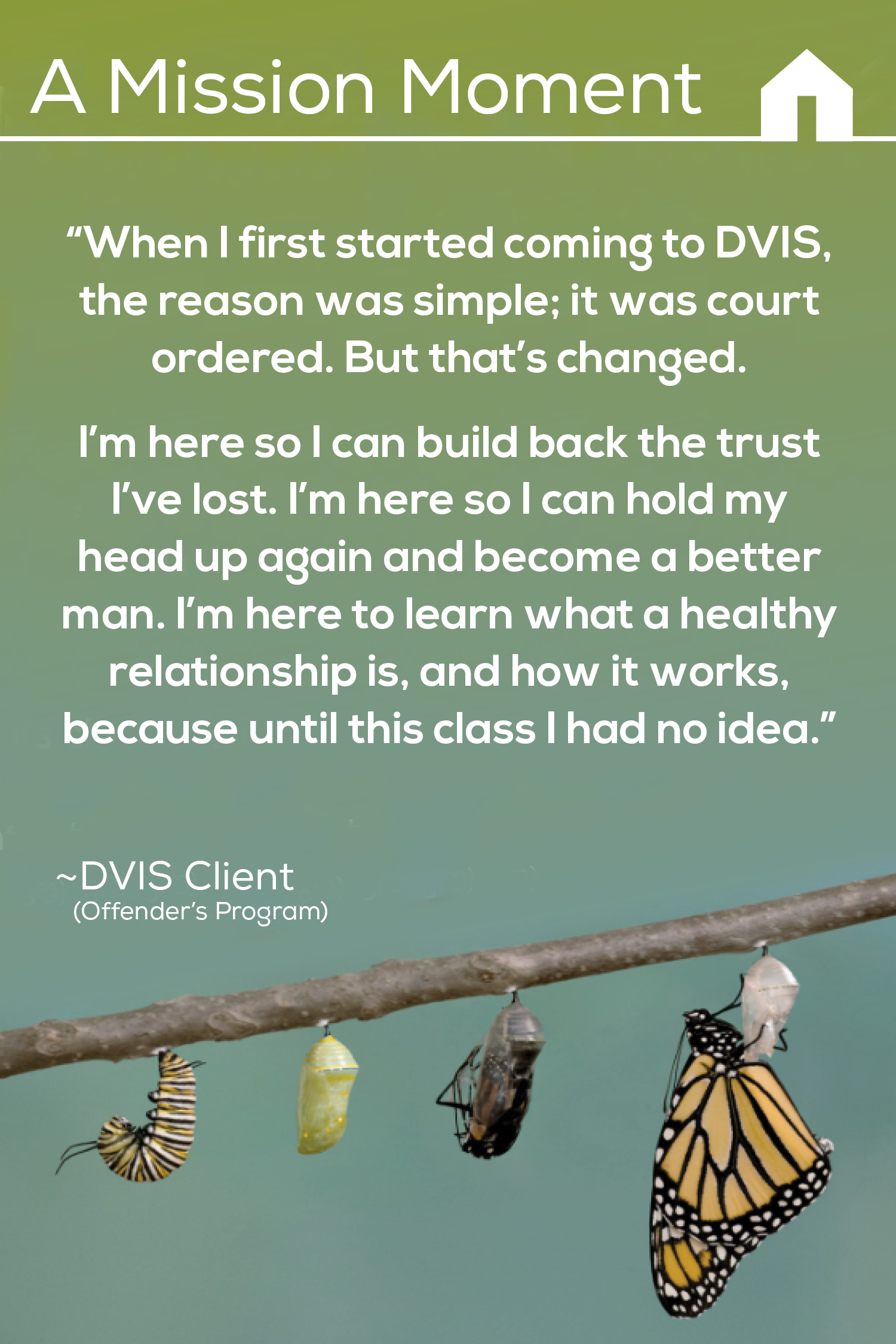
DVIS’s court-ordered domestic violence program is a 52-week group curriculum regulated by the Oklahoma Attorney General, that is designed to help offenders end coercive and abusive behaviors in their relationships. The Abusive Partners Intervention Program (APIP) covers 11 mandated topics that challenge belief systems, emphasize personal responsibility, and offer tools and techniques for behavioral change.
Caring Dads
A 17-session group where fathers can learn safe ways to parent, and grow stronger connections and trust within the family. This program combines parent-focused support with lessons about respectful, non-abusive communication and positive fathering.
Circles of Peace
Rather than emphasize punishment and separation, this program offers a restorative, survivor-centered alternative. Circles of Peace honors the voices of survivors, supports those who have caused harm, and creates pathways for repair. Through restorative circles, community involvement, and trauma-informed support, this program aims to address harm at its roots and prevent future violence.